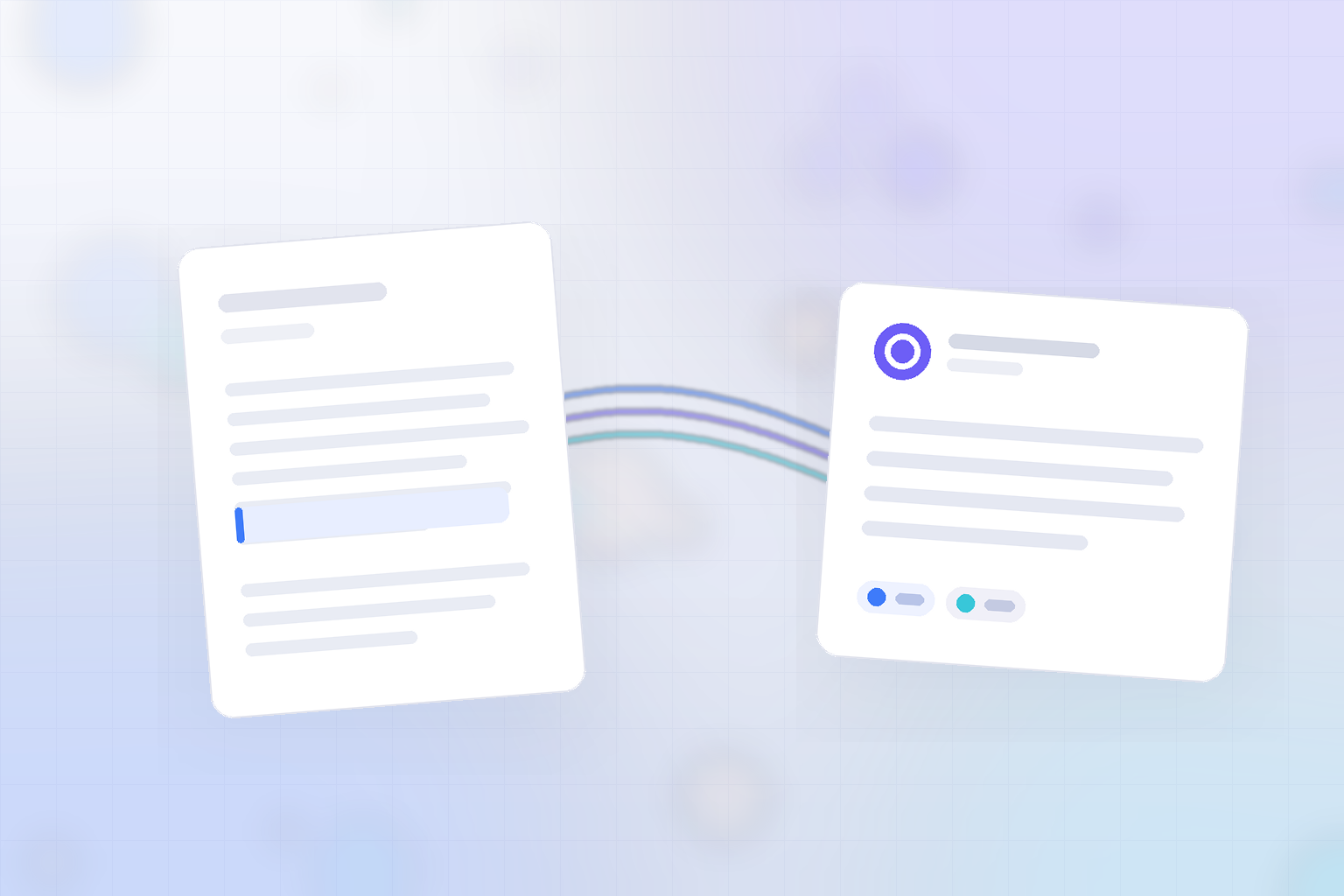
The Post Was Already Written. It Was Just Addressed to Someone Else.
It is Sunday night. You have a vague feeling that you should post something on LinkedIn this week, so you open an empty page and wait for an idea to arrive. Nothing does. You type a sentence about leadership, delete it, and try one about productivity instead. It sounds like everyone else.
Here is the strange part. On Thursday you wrote something genuinely good. Maybe it was a memo to your team about why a project was slipping, or an email to a client explaining what they should do before the next quarter. You felt sharp writing it. The reasoning was clean, the advice was specific, and it came from years of seeing the same problem up close. You would never post it, of course. It was written for one reader.
So the best paragraph you wrote all week sits in a document a handful of people will read once, while you stare at a blank page trying to sound interesting about nothing in particular. That gap is not a talent problem. It is a sourcing problem, and it is fixable tonight.
Repurposing is not recycling old posts
When most people hear "repurpose content," they picture taking last year's post and changing the opening line. That is not what I mean.
The richer source is the writing you already do that never touches LinkedIn: memos, proposals, client emails, meeting notes, the long message where you finally explained something properly. That writing has a quality most posts lack. It was written to solve a real problem for a real person, so it already carries a specific, earned point of view. Nobody writes a client email to sound clever. They write it to be right.
Do this today: open your sent folder and find the longest email you wrote last week that explained something. Do not edit it yet. Just notice that it exists.
The anatomy of a post is already inside your memo
Picture an operations consultant. She sends a short proposal to a client recommending they stop running three separate onboarding processes and merge them into one. In two paragraphs, the proposal does three things:
- It makes a claim: three onboarding paths create three different first impressions, and new hires notice.
- It gives evidence: the questions new hires keep asking in their first week are different depending on which team they joined.
- It offers one action: map the first five days for each path on a single page and look for the overlap.
A claim, the evidence for it, and one thing the reader could act on Monday. That is the whole anatomy of a strong LinkedIn post. She did not need inspiration. She needed to notice that the hard part was already finished before she opened LinkedIn.
The ten-minute extraction
Turning private work into a public post takes three moves, and it usually takes about ten minutes once you have done it a couple of times.
First, pull the one sentence you would say out loud. Imagine a colleague asks, "So what was the point of that memo?" Whatever you would answer, in one breath, is your opening line. For the consultant, it is something like: "Most companies do not have an onboarding problem. They have three onboarding problems pretending to be one."
Second, name who it was for. Not the client by name, but the kind of person. "A growing team that hired in three departments at once." This tells your reader whether the post is about them, and it keeps the advice grounded.
Third, cut everything that only matters to that one client. Budgets, names, internal politics, dates, the paragraph about their specific software. What remains is the transferable insight, and it is usually shorter and sharper than you expect.
Do this today: take the email you found and write only the one sentence. If you can say it out loud without wincing, you already have a post.
What the empty page is taking from you
Here is what most people miss. What you lose by not posting is not abstract. It is specific and it is quiet.
Somewhere, a former colleague is being asked, "Do you know anyone who really understands onboarding?" They think of three people. You are not one of them, because the only evidence of your thinking lives in a client folder they will never see. They refer someone who posts regularly about the topic, even though your memo was better.
Six months of good private work, dozens of careful emails and thoughtful proposals, can leave zero public proof that you think this way. The client got the value. Nobody else did. The person who might have hired you next year has nothing to find when they look you up.
And the thinking was already done. You spent the hour. You did the hard part. Leaving it in a private document means you earned once from work that could have earned twice.
The way in is smaller than you think
You do not need a content calendar or a personal brand strategy to fix this. You need one habit: when you finish writing something good for one person, ask whether its central sentence would help a hundred people. If it would, spend ten minutes on the extraction before you move on.
This is also why the effect compounds. Each post becomes a public version of private expertise. The same hour of thinking serves your client on Thursday and everyone who might hire you on Sunday. Over a few months, your profile stops being a résumé and starts being a record of how you think.
That handles the first post. For everything you have already written in public (the services page on your company site, an article you published last spring, a talk write-up, a page that explains your approach), myBrandIn has a feature called Repurpose URL at https://mybrandin.com/repurpose. You paste the link, choose a style, and it fetches the page text and returns a LinkedIn post draft you can edit and queue. It reads public pages only, so your memos and client emails stay yours. Start with one link today and see what comes back.
Start where the work already is
The post you have been trying to write on Sunday nights was written on Thursday, for someone else. All it needs is a new address.
Start today. It takes 3 minutes. Your future self will look back at this moment.
https://mybrandin.com (free, no credit card)